

Description
Sungold Power Off-Grid Solar Kit 3000W Inverter 12VDC 120V Output LifePO4 Battery 600 watt Solar Back Up
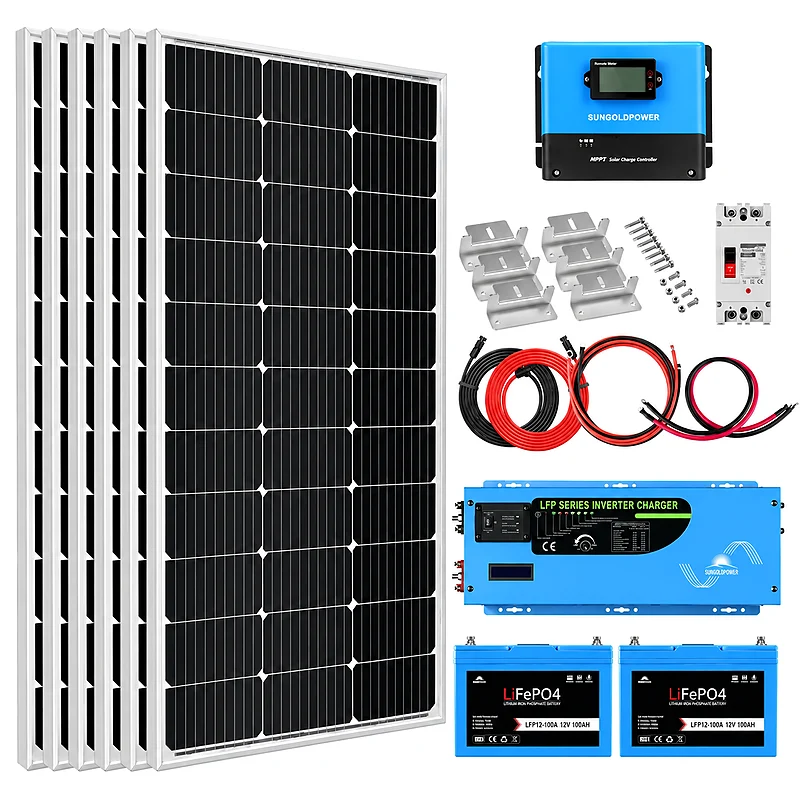
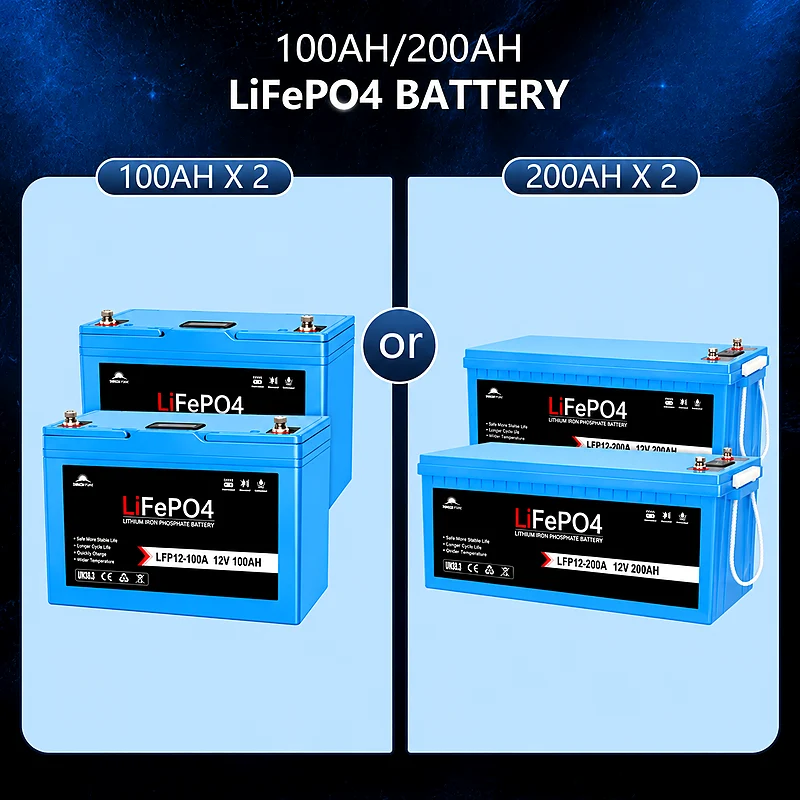
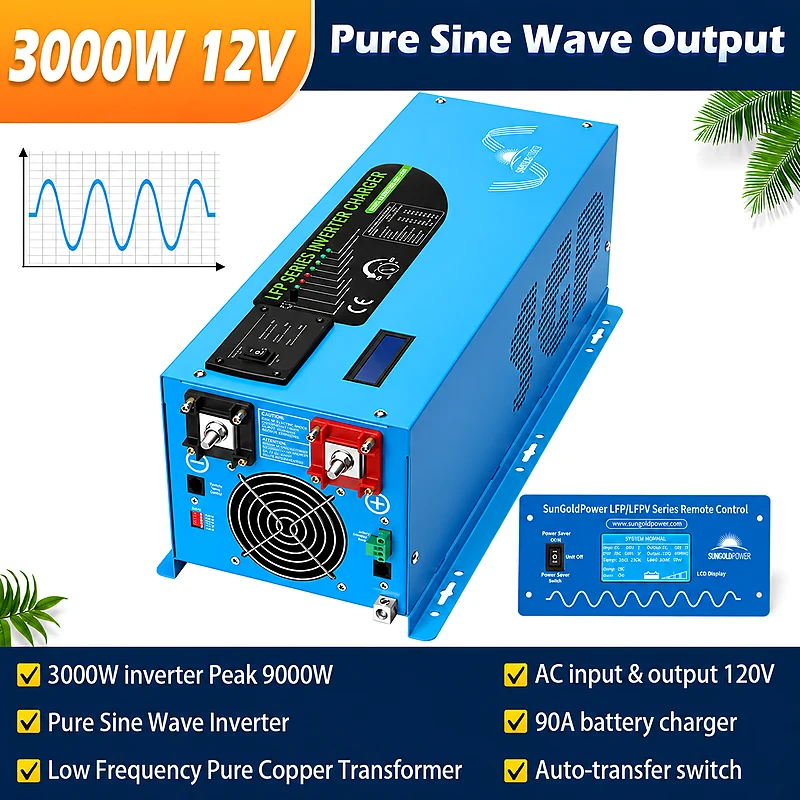
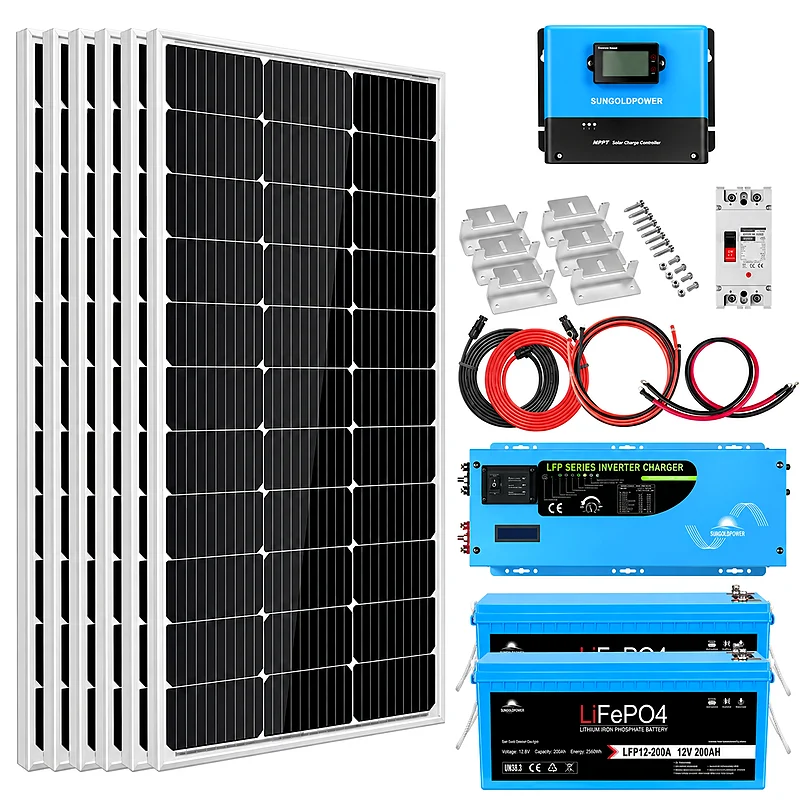
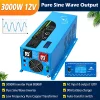
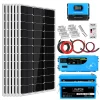
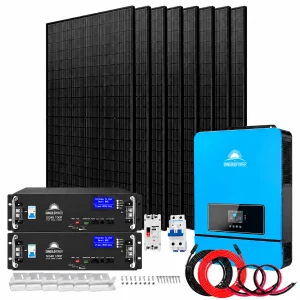
Most inverters quote a surge figure they can hold for a few milliseconds. This one is a low-frequency transformer design built to hold a heavy overload for twenty full seconds, which is the difference between starting a compressor and tripping on it. It’s the smallest complete system we sell, made for a van or boat build that’s already 12V, a small cabin, or backup on a handful of circuits. Six 100W panels, 3,000W of continuous output, and your choice of 2.56kWh or 5.12kWh of self-heating LiFePO4: a refrigerator runs about 14 hours on the smaller bank and 28 on the larger, with no sun at all.
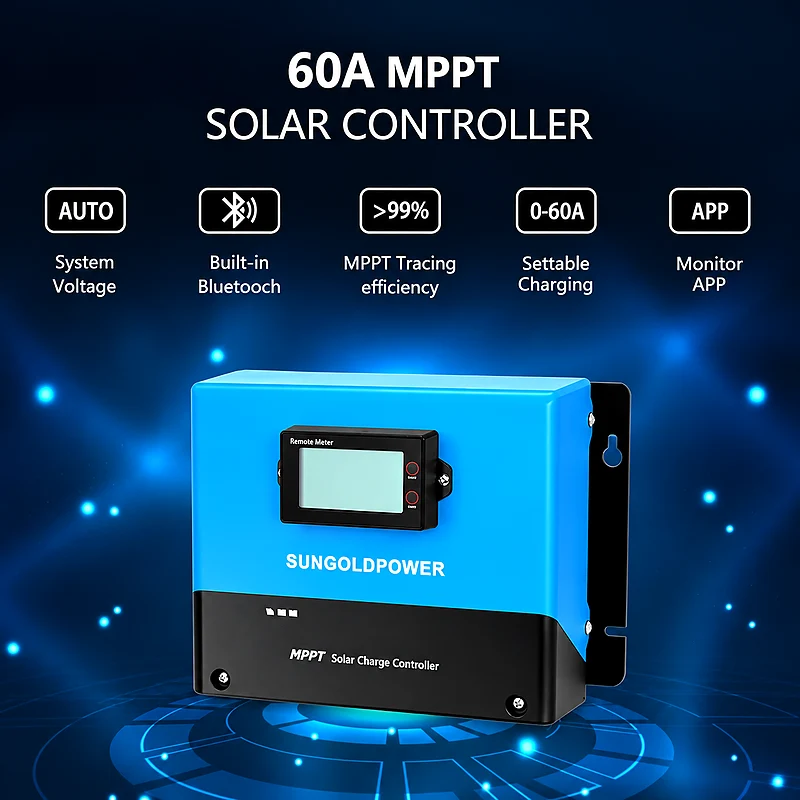
120V output only, and 12V caps the array at 800W. No 240V appliances. Every watt of solar runs through the included 60A controller, which tops out near 800W on a 12V bank against the 600W already in the box. That’s room for two more panels and no more. Twelve volts also means high current: 3,000W pulls over 250A, so the batteries have to sit right beside the inverter. If there’s any chance this becomes permanent primary power, start at 24V or 48V instead.
Good fit for
- 12V vehicle and boat builds – Matches an existing 12V house system, so nothing has to be converted.
- Emergency backup on a few circuits – Fridge, lights, phones and internet through an outage.
- Small cabins and shepherd huts – Occupied occasionally rather than continuously.
- Sheds and remote outbuildings – Lighting and an outlet where running a cable isn’t practical.
Key features
A transformer inverter, not a high-frequency one – That’s why it weighs 49 lbs for its size, and it’s the whole point. The inverter is rated to 9,000W for twenty seconds. In practice the batteries set the real ceiling: the pair supports roughly 400A on the 100Ah option or 490A on the 200Ah, which works out to somewhere around 4,500W and 5,500W at the outlet. Either way it starts motors that a 3kW high-frequency inverter will not.
90A AC charger and automatic generator start – Plug in shore power or a generator and it refills the bank at up to 90A, and it can start a generator on its own when the battery gets low. There’s an AC-or-battery priority selector too, so you decide what the system leans on first.
Self-heating batteries as standard – Both options warm themselves so they can charge below freezing, which matters for an unheated cabin, a shed in winter, or a van parked in the cold.
Bluetooth on the batteries and the controller – State of charge, cell health, and array performance from your phone, with nothing extra to buy. The inverter itself has no app.
The upgrade that actually matters is the battery – The array can only grow by about 200W, so doubling the bank from 2.56kWh to 5.12kWh is the one meaningful choice on this page. The larger cells also charge faster.
Reviews
There are no reviews yet.