

Description
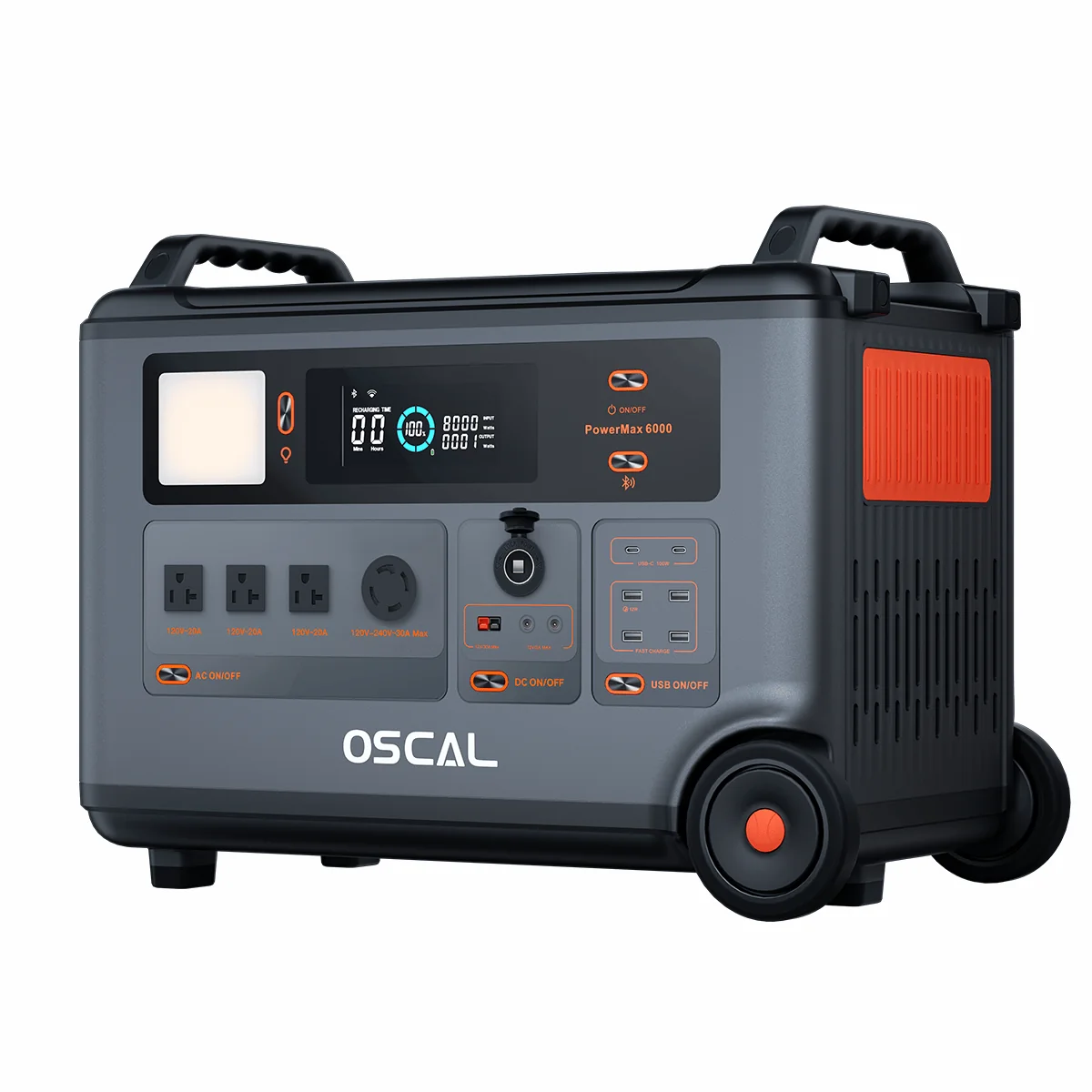
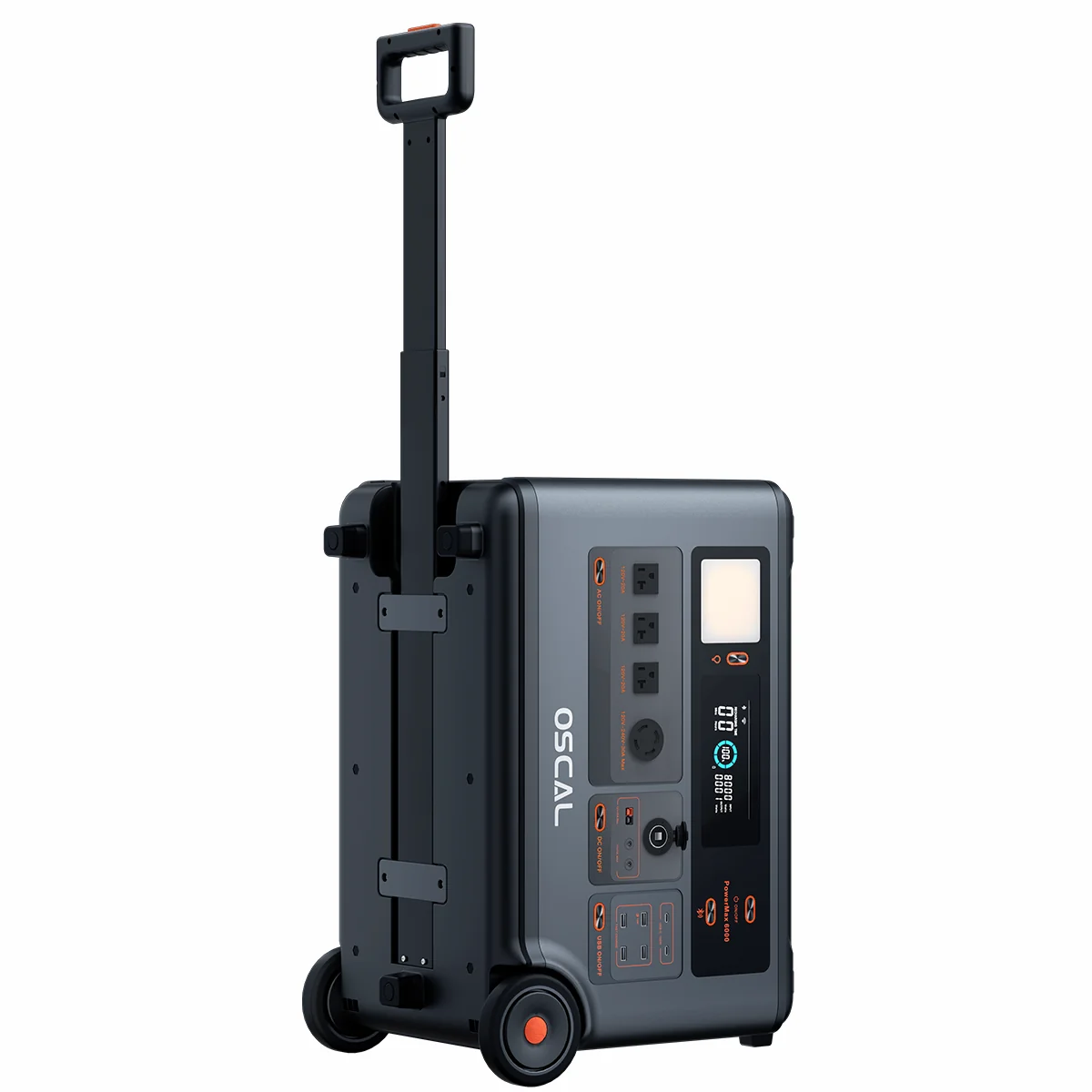
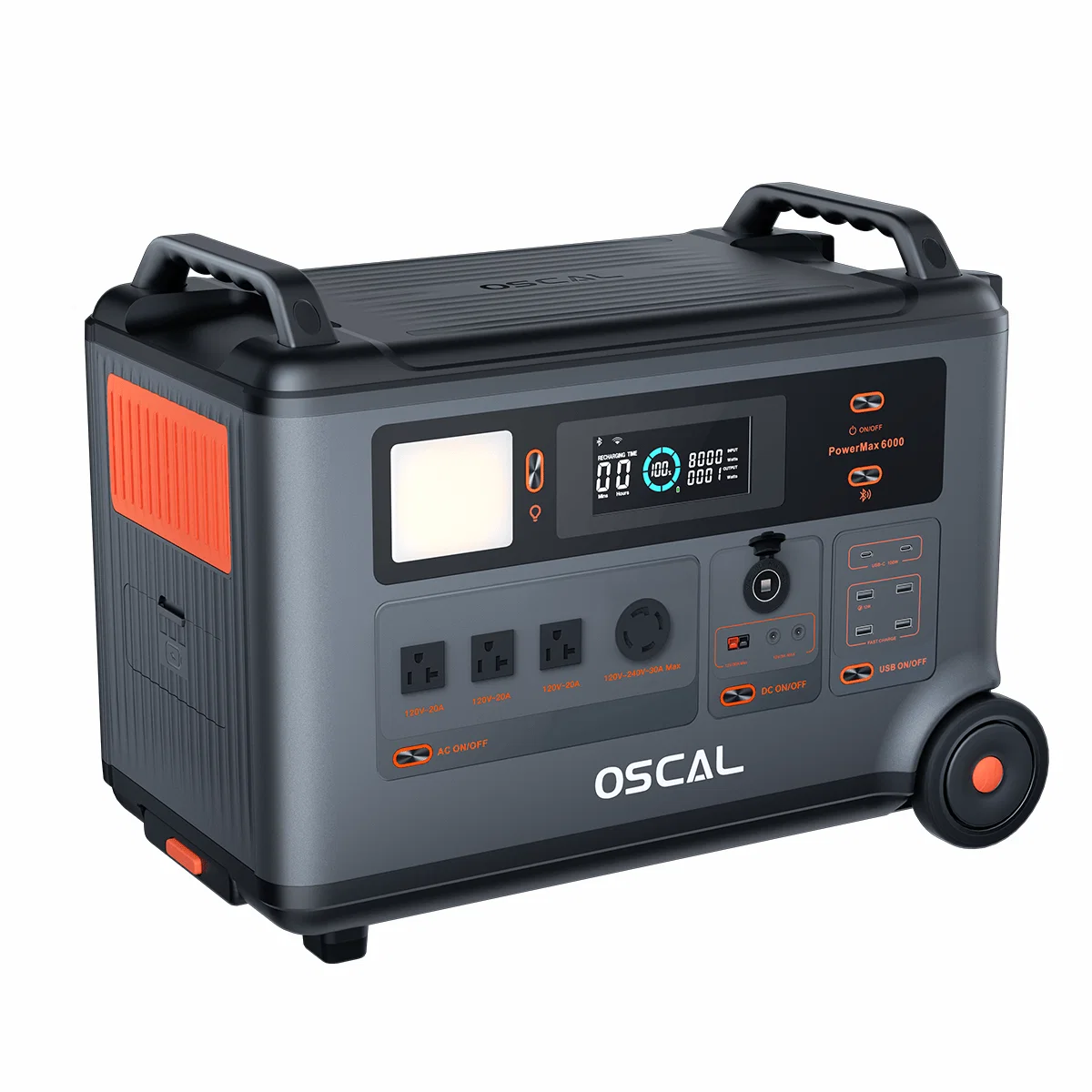
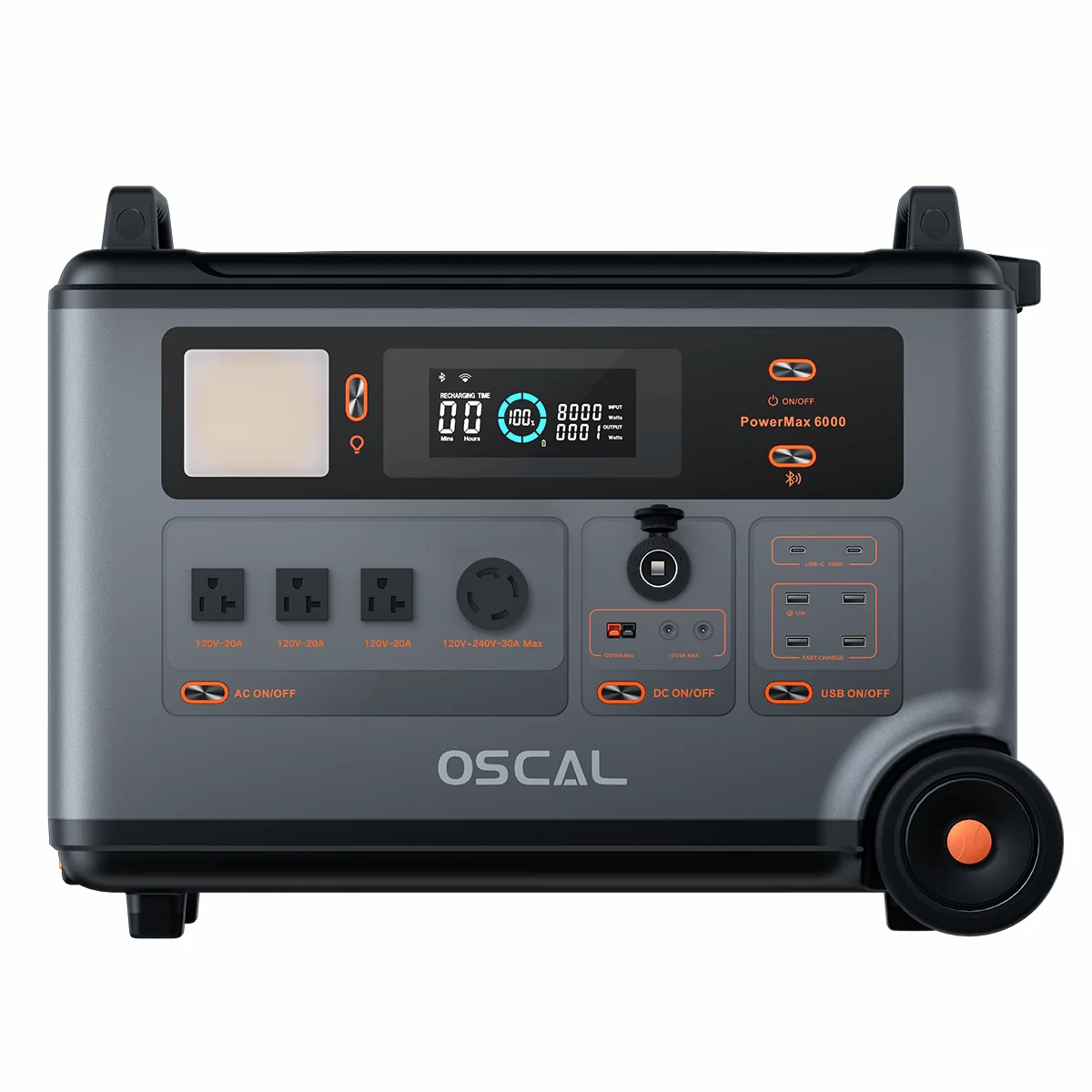
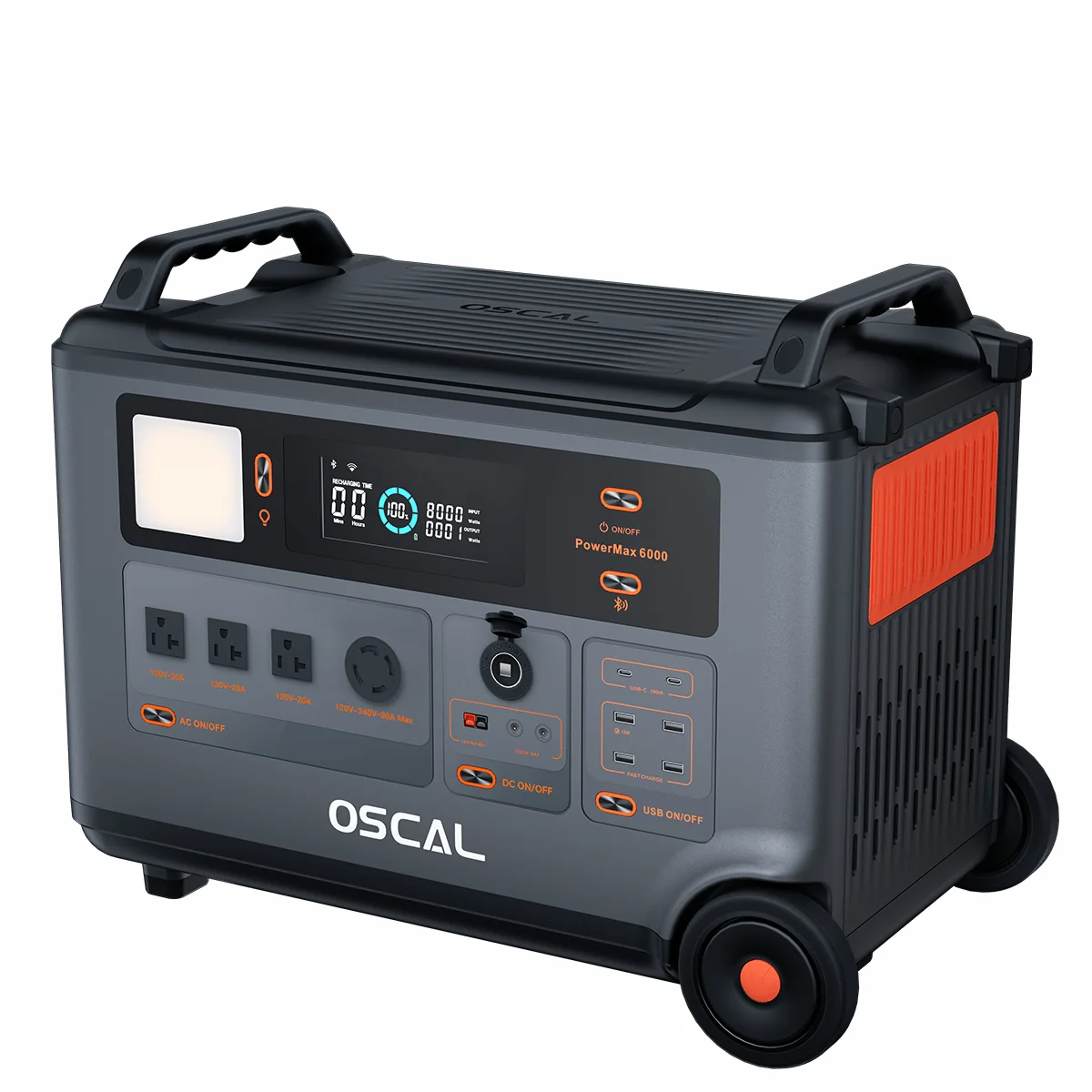
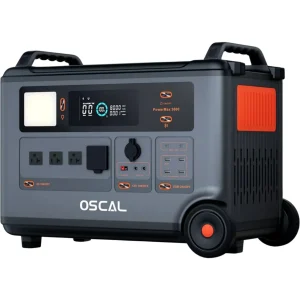
Oscal PowerMax 6000 | 6000W Portable Power Station | 120/240V Split Phase | 3600Wh LiFePO4
Most portable power stations give you one 120V leg and about 2,000W. This one gives you 6,000W across true 120/240V split phase, through three 20A outlets and one 30A, out of a box you can wheel into a garage. That is well pump and 240V compressor territory from something that needs no install, no permit and no electrician.
Read this part before you buy, because it is the thing people get wrong. The 6,000W is the output. The storage is 3,600Wh, which is a little over an hour at full tilt. This unit is built for how much you can run at once, not how long you can run it. If you want days of autonomy rather than hours, that is what the expansion batteries are for, and each one adds another 3,600Wh. Size the output for your biggest load and the battery for how long you need it, and this is an easy machine to own. Buy it expecting a whole-home battery bank and it will disappoint you.
How long it actually runs
Runtimes below are from a full charge with nothing coming in, based on roughly 3,060Wh reaching your outlets. Oscal publishes the 3,600Wh nameplate but does not publish an inverter efficiency figure, so we allow 85% for conversion loss rather than quoting the nameplate as if all of it reaches the socket. If Oscal publishes a figure we will use theirs. Divide 3,060 by what an appliance draws and you get the hours, which is arithmetic you can check rather than a claim you have to trust.
| Load | Draw | On the unit alone | Plus 1 extra battery |
| Chest freezer | ~100W avg | ~30 hours | ~61 hours |
| Refrigerator | ~150W avg | ~20 hours | ~40 hours |
| Lights, electronics, internet | ~300W | ~10 hours | ~20 hours |
| Full household (essentials only) | ~800W avg | ~3 hours | ~7 hours |
| Window AC unit | ~900W | ~3 hours | ~6 hours |
| Microwave | 1,000W | ~3 hours cumulative | ~6 hours cumulative |
| Well pump (1HP), running | ~1,200W | ~2 hours | ~5 hours |
| Central AC (2-ton) | ~3,000W | ~1 hour | ~2 hours |
| Electric water heater | ~4,500W | ~40 minutes | ~1 hour |
A well pump does not run for two hours, it runs for ninety seconds when someone opens a tap, so treat the bottom rows as the ceiling for each load in isolation rather than a duty cycle. The rows that matter for an outage are the top three: a fridge and a freezer and your internet come through a day and a night on the unit alone, and closer to three days with two extra batteries. The bank is expandable to fifteen batteries and 57.6kWh total, so the ceiling here is budget rather than hardware.
Choosing your configuration
Two decisions, and they are easier apart than together. Neither changes the unit itself, so you can also add either later.
| The choice | What it changes | How to decide |
| Extra batteries None, 1, or 2 |
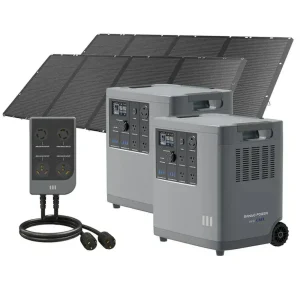
Each BP3600 adds 3,600Wh, roughly doubling then tripling every runtime in the table above. Output stays 6,000W either way. | Look at the runtime table. If a day and a night on the fridge is enough, take none. If you are planning for multi-day outages, take one or two. |
| Solar panels None, or 1 to 4 x 400W |
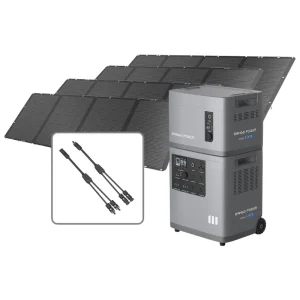
Lets the unit recharge itself without a wall outlet. The unit accepts up to 1,500W of solar input, so a fourth panel adds capture in poor light rather than raising the ceiling. | Take panels if the outage you are worried about lasts longer than the battery does. For short outages the wall outlet recharges it faster. Three or four panels need a Y-branch to combine them, which we put on the order for you. |
Key features
True 120/240V split phase, 6,000W – Three 20A outlets and one 30A, pure sine wave. The 240V leg is what separates this from almost every portable power station at the price, and it is what lets it run a well pump, a compressor or a 240V tool without a transformer.
3,600Wh LiFePO4, rated 3,500 cycles to 80% – Lithium iron phosphate rather than the NMC chemistry in most consumer power stations. At one cycle a day that rating is most of a decade.
Expandable to 57.6kWh – Up to fifteen BP3600 batteries alongside the built-in 3,600Wh. You can start with the unit alone and add capacity as budget allows, which is not true of a sealed power station.
Recharges in about two hours – 1.96 hours at the full 2,200W AC input. Solar, car and generator charging are all supported, and it accepts AC and solar together.
Runs indoors – No fumes, no fuel, no carbon monoxide. It sits in a utility room or a hallway during an outage, which a gas generator cannot do.
App monitoring over WiFi and Bluetooth – Live draw, state of charge and settings from your phone, so you are not walking to the unit to see where you are.
Eight-layer BMS and a 4 year warranty – Protection against overcharge, over-discharge, short circuit, over-voltage and temperature excursion, and a warranty term longer than most of this category.

Reviews
There are no reviews yet.